Skip to content

News

No results articles found

  • Benny Sings - You Love Me Patta

    Benny Sings - You Love Me

    Benny Sings returns with “You Love Me,” a tender new single taken from his forthcoming album 22 Durnham Dew, out September 25 via Stones Throw / Sings Records. A love duet sung with his wife, Joline van Berkestijn, the track finds Benny turning everyday moments into something warm and deeply personal. Accompanying the release is a self-directed music video filmed in Paris, extending the song’s intimate feel through a simple, understated visual. Watch the music video for “You Love Me” now.
    • Music

  • Patta Paris Cypher 2026 Patta

    Patta Paris Cypher 2026

    For Fête de la Musique 2026, Patta brought together some of the finest voices from the Paris underground scene for a live rap cypher. Wata MC, Dooky, James le J, Costa, Inférieurà3, Radou, D2R, L'Ultra, Oussoum, Robinin, Dre, Ismayyyel, Kun and Nanor took over the mic while DJ Cheetah held it down behind the decks. Special thanks to Oroko Radio for the broadcast, Le Cercle, Vicky R, and Daymolition for the artist curation, and to Café de l'Arc for the stage. 
    • Music

  • Erykah Badu & The Alchemist - Witch Doctor Patta

    Erykah Badu & The Alchemist - Witch Doctor

    Erykah Badu and The Alchemist link up on “Witch Doctor,” a hypnotic, slow-burning track that blends Badu’s unmistakable presence with Alchemist’s hazy, sample-driven production. Eccentric, soulful and effortlessly off-kilter, the collaboration feels exactly as strange and natural as you’d expect from two artists who have spent their careers creating worlds of their own. Watch the “Witch Doctor” music video now.
    • Music

  • Victory Lap: TRAINING MODE VOL.1 Patta

    Victory Lap: TRAINING MODE VOL.1

    Victory Lap Radio presents Training Mode Vol.1 (2025) a documentary showcasing the new voices of the UK. Featuring 25+ artists and shot all over London in 2025.
    • Film & Documentaries

  • Layers - Pen & Pixel Patta

    Layers - Pen & Pixel

    Shawn Brauch, the visionary co-founder of Pen & Pixel, designed over 20,000 iconic album covers. Pen & Pixel hand-crafted the wildest, diamond-encrusted album art in music history. We’re diving into Shawn Brauch’s genius and the practical effects behind 90s rap’s most legendary visuals. Here is the story of the man who illustrated the bling era. In this episode of "LAYERS", Shawn Brauch walks us through how he designed album covers for Master P, Snoop Dogg, and Lil Wayne using Adobe.
    • Art

  • Free The Youth x Jordan at Patta London Patta

    Free The Youth x Jordan at Patta London

    Join us at Patta London to celebrate the launch of Free The Youth x Jordan. Thursday, August 13th, 18:00 - 20:00. Music by Selassie TBC. First come, first serve.
    • Events

  • What went down at the Tiwa Savage meet & greet Patta

    What went down at the Tiwa Savage meet & greet

    Photography by Andrea AmponsahThis past Sunday, August 9th, we had the pleasure of hosting the legendary Tiwa Savage at our Patta Amsterdam store for an exclusive meet-and-greet. Patta Amsterdam served as a vibrant bridge that brought together different circles and many new faces into the store. It was a unique opportunity for the community to connect with a global Afrobeats icon and one of Nigeria’s most influential artists in an intimate setting. As the first woman to win the MTV EMA for Best African Act, Tiwa Savage continues to shape the sound of a generation, and seeing that energy reflected in our space was a true victory for the Patta community. Thank you to everyone who came through and made this afternoon special. We look forward to continuing to expand our community and connecting with you all through more moments like this in the future.
    • What Went Down

  • Patta x Athenaeum Open Source Patta

    Patta x Athenaeum Open Source

    Education stands as one of Patta’s core pillars. The reality is that Black and POC perspectives are often excluded from mainstream narratives, yet they are vital to understanding history, culture, and identity. Reading is power, and access to diverse stories is essential. That’s why Patta is launching Patta Open Source bookshelves, a literary collection curated by Team Patta in collaboration with Athenaeum Bookstore, that centers the voices of those too often overlooked.We’re not just putting books on a shelf. Patta Open Source is making room for stories that challenge the way we think and push us to see the world from different perspectives. Some books will spark curiosity, others will raise difficult questions, and many will offer inspiration. But most importantly, they will all contribute to a broader conversation, one that breaks old narratives and builds new ones. Each One, Teach One.Express YourselfTourmaline : The Joy and Defiance of Marsha P. JohnsonMarsha P. Johnson was more than an icon of the Stonewall uprising — she was a living symbol of radical joy, resistance, and humanity. In The Joy and Defiance of Marsha P. Johnson, artist and activist Tourmaline brings her story to life with equal parts tenderness and fire. Johnson’s voice, so often drowned out in official histories, is finally given the space it deserves. This is not a conventional biography, but a poetic tribute to what it means to live freely in a world that keeps denying that right. Tourmaline writes with rhythm and warmth, celebrating both the flamboyant and the fragile. The Joy and Defiance of Marsha P. Johnson is essential reading for anyone who wants to understand what it truly means to be yourself — in full color, against the current.Must Read Ta-Nehisi Coates: The MessageWith The Message, Ta-Nehisi Coates returns as the clear, uncompromising voice of contemporary Black consciousness. Best known for Between the World and Me, Coates here explores what remains of hope, truth, and community in a world so often divided. His writing is lucid and lyrical, probing what it means to stay human amid noise and regression. Coates traces the legacy of hip-hop, politics, and spirituality as forces of both resistance and beauty. This is no manifesto but a meditation — fierce and tender at once. The Message is a book to read and to feel: a call for dignity, nuance, and resilience.His StorySudhir Hazareesingh: Daring to be Free: Rebellion and Resistance of the Enslaved in the Atlantic WorldSudhir Hazareesingh reminds us that the history of slavery is not only a story of oppression, but also of defiance. In Daring to Be Free, he recounts the courage and rebellion of the enslaved across the Atlantic world — from Haiti to Brazil, from Cuba to the United States. He shows that freedom was never granted, only fought for. Drawing on testimonies, songs, and diaries, Hazareesingh weaves a powerful tapestry of human dignity. This book is a tribute to the men and women who revealed the foundations of the modern world — not as victims, but as thinkers, dreamers, and revolutionaries. Daring to Be Free is history that breathes, glows, and inspires.Non-Fiction Be The Real Hip HopRobin Givhan: Make It Ours: Crashing the Gates of Culture with Virgil AblohIn Make It Ours, Pulitzer-winning journalist Robin Givhan pays tribute to the incomparable Virgil Abloh — designer, visionary, and bridge-builder between street culture and haute couture. Givhan traces how Abloh rewrote fashion’s codes and cracked open the doors of white institutions. This is no glossy portrait but a sharp, affectionate essay on creativity as liberation. She frames Abloh’s legacy as an act of cultural reclamation: from Off-White to Louis Vuitton, from Chicago to Paris. Make It Ours is a celebration of Black brilliance — and of the right to define beauty on one’s own terms.Brand New FunkZadie Smith: Dead and AliveZadie Smith is at her best when she writes from the inside out — about art, life, and the fragile boundaries between them. In Dead and Alive, she explores the fine line between creation and destruction, freedom and fear, identity and form. Smith reflects on the artist’s role in times of crisis, and on the constant reinvention of self in a shifting world. Her prose is, as ever, supple, witty, and layered — attuned to both rhythm and thought. Dead and Alive is a meditation on surviving with style, on the moral duty of beauty, and on how art keeps the human heart in motion.Music PleaseAnnie Zaleski: Queens of Disco In Queens of Disco, Annie Zaleski revives the glittering history of disco — this time through the women who made it legendary. Donna Summer, Gloria Gaynor, Grace Jones: their voices became the soundtrack of freedom, sensuality, and pride. Zaleski writes with energy and insight, but most of all with love for the music and the subcultures it nurtured — from the ballroom scene to New York’s queer clubs. Queens of Disco shows that disco, often dismissed as kitsch, was in fact a revolution: a stage for expression, a celebration of identity. A sparkling, rhythmic tribute to the power of beat and self-liberation.The Patta Open Source Bookshelf will appear as a recurring feature in the Patta Magazine, showcasing a curated selection of titles available at our bookshelf at Athenaeum store in Amsterdam.
    • books

  • Patta Selects: Orkestra Patta

    Patta Selects: Orkestra

    Interview by Violette Esmeralda | Photography by Anna Dekker Orkestra isn’t easily defined, and that’s exactly the point. Orkestra is a kaleidoscope of practices as diverse as a healthy ecosystem. It’s core is centred around ecology, art and wildlife. Founded by artists Aukje Dekker and Kristian de la Riva, Orkestra is less a destination than a reciprocal system: what you bring shapes what you receive. Located in Asturias, a region of northwest Spain, set within dramatic coastlines, ancient mountains, and a powerful river, Orkestra uses artistic thinking to challenge how we relate to the living world around us, posing a quiet but radical question: what might happen if we stopped trying to control life, and instead learned how to collaborate with it? How would you describe Orkestra? What can people expect when they visit? Orkestra is the name we came up with to bring together all the things we’re fascinated by: from animal-tracking courses, art interventions, fermentation masterclasses, artist residencies, animal communication, Rewilding leadership programs’, festivals, foraging and a sculpture garden. We have a hotel with twelve full-board rooms, a small cabin, a big vegetable garden, sheep, dogs, chicken and are surrounded by untouched nature and a pretty impressive river. The place itself is a breeding ground for all kinds of projects and radical encounters. The views are ridiculous. The coastline is pure drama, and the mountains are ancient. This year, we are planning wolf snow tracking in Slovakia, a special solar eclipse expedition, and more. There’s also talk of hosting a Patta Academy here. And of course: Patta Asturias, Goat Socks Edition. Underneath it all is a desire to radically shift how we interact with and understand the living world around us, one of the biggest challenges our culture faces in these times. How do you define permaculture, and how is that important to Orkestra’s practice? How can people apply those principles in their own communities? Permaculture is a way of re-seeing landscapes: not as resources, but as living fountains of biodiversity. There are many methodologies within permaculture, but we approach it with trial, error, play, and fun. That mindset takes away the pressure of needing to know everything. Instead, you learn by experimenting. The essence is simple: if the birds eat all your berries, don’t try to get rid of the birds; plant more trees. You can’t really do it wrong. Just engage. If you care for more than yourself, it works. Always perennial over annual. How do your backgrounds influence Orkestra? What do you each bring to the project? We were classmates at Central Saint Martins in London and are both grounded in artistic education. Art school taught us how to look and observe, to read patterns, subtleties, and relationships. Together, we use art as a tool to create new ways of relating to the natural world. What has surprised you most since moving here and building Orkestra? Living with the seasons and the realisation that there are more than just four. In Japan, they recognise seventy-two. We reduce things to understand them, but life is messy and complex. When you spend more time outside, there are new forces at play. If you’re quiet enough to listen, there’s still so much to learn about managing time and energy better. At the end of the day, we don’t know shit. Nature teaches you humility if you let it. What are you currently working on that you’re excited about? We are working on our Sculpture Garden of Decay. Ranging from nine-metre-high carved wooden sculptures to oil paintings, every piece lives outside with no upkeep. Insects, weather, mould, everything becomes an active collaborator. The whole process will be visible on our website. 
    • Art

  • Get Familiar: spazioSERRA Patta

    Get Familiar: spazioSERRA

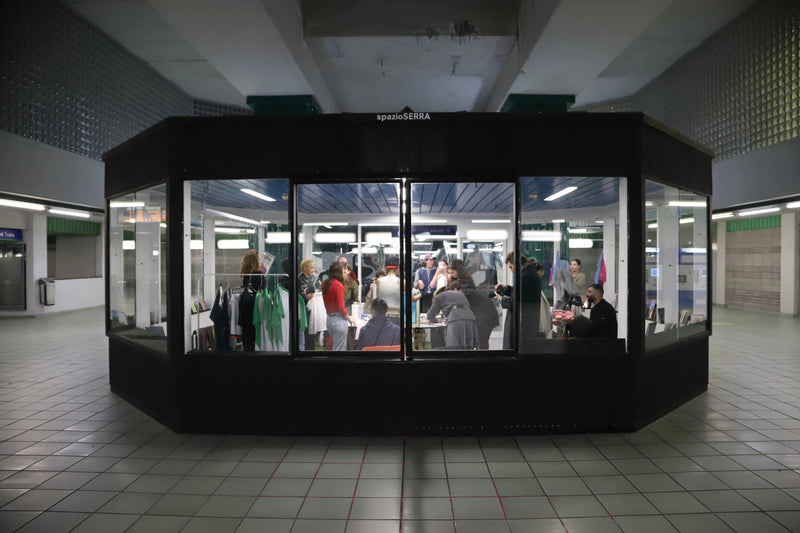
    Interview by Passion Dzenga and Liesje Verhave | Imagery courtesy spazioSERRAMost galleries ask people to come to them. spazioSERRA asks something different. Hidden inside Milan's Lancetti railway station, the independent exhibition space exists in a place designed for movement rather than contemplation. Every day, commuters, students, families and local residents pass through its doors, often encountering contemporary art entirely by accident.That tension has shaped the collective's practice since its founding. Rather than treating the station as simply another venue, spazioSERRA has embraced it as both subject and collaborator. Here, exhibitions are conceived specifically for a public in transit, where artworks compete with train announcements, morning routines and the constant rhythm of the city itself. There is no white cube, no controlled viewing experience and no expectation that visitors arrive already interested in contemporary art. Instead, every exhibition begins with a simple question: what happens when art interrupts everyday life?We spoke with the spazioSERRA collective about nearly a decade of working inside a railway station, developing a curatorial practice rooted in site-specificity, and why they believe public art should never be neutral.spazioSERRA has always existed inside a railway station rather than a traditional gallery. Why was that important from the beginning?The station has never simply been a venue for us. From the very beginning, it was the starting point for the entire project. Rather than asking how we could fit contemporary art into a railway station, we were interested in understanding what kind of exhibitions could only exist in a place like this. The context changes everything. A station is designed for movement, transition and routine. People aren't there because they've decided to spend an afternoon looking at contemporary art. They're commuting to work, heading home, meeting friends or simply passing through.That completely transforms the relationship between the artwork and its audience. In a traditional gallery, visitors have already made a conscious decision to engage with an exhibition before they even walk through the door. They arrive prepared to spend time looking, reading and reflecting. Here, that expectation disappears. Most people encounter the exhibitions unexpectedly. Some only glance at them while waiting for a train. Others return every day as part of their commute and slowly build a relationship with the work over weeks or months without even realising they're doing so.For us, that's incredibly exciting because it means the exhibitions become part of everyday life rather than something separate from it. During the pandemic, for example, many museums and galleries were closed, but because our exhibitions were visible from the station itself, people could continue experiencing contemporary art simply by moving through the city. That reinforced something we'd always believed: art doesn't need to exist inside isolated cultural institutions. It can become another layer of the urban landscape, living alongside the rhythms and routines of the people who pass through it every day.Your audience is often accidental rather than intentional. How does that change the way you think about curating exhibitions?It influences almost every curatorial decision we make. Unlike a museum or commercial gallery, we can't assume that our audience already has an interest in contemporary art or even knows who the exhibiting artist is. Most visitors didn't wake up planning to see an exhibition. They're simply moving through the station as part of their daily routine. That means we have to think very carefully about how somebody encounters the work for the first time.Accessibility is important to us, but we don't think of accessibility as simplifying ideas. Instead, it's about creating multiple points of entry. Someone who only has thirty seconds before their train arrives should still be able to connect with something visually or emotionally. At the same time, somebody who returns every day for a month should continue discovering new layers, new references and new meanings each time they encounter the work.That creates a very different kind of exhibition design. We think about sightlines, movement through the station, how the architecture frames the work and how people experience it from different distances. The audience isn't standing still. They're constantly in motion. The exhibitions have to acknowledge that movement rather than resist it.What's particularly interesting is that people begin creating their own relationships with the exhibitions over time. Some commuters see the same installation every morning on their way to work and every evening on their way home. Without necessarily intending to, they become long-term spectators. Their understanding develops gradually through repetition rather than through a single dedicated visit. Site-specificity seems to be central to your programme.How do artists respond differently when they know their work will exist in a public space?That's one of the reasons artists are often excited to work with us. We don't invite people to simply install an existing body of work inside the station. We ask them to begin with the station itself. The architecture, the movement of people, the visibility of the space and the surrounding neighbourhood all become part of the conversation before a single artwork is made.That process often changes the work dramatically. Instead of treating the exhibition as something independent from its surroundings, artists begin responding directly to the environment. Sometimes the architecture becomes part of the installation. Sometimes the public becomes part of the work. Sometimes the exhibition only makes sense because it's happening in that precise location.Over the years, we've realised that there isn't really a clear boundary between the artwork and the station anymore. The two continuously influence one another. The work transforms the space, but the space also transforms the work. The audience completes that relationship because every person experiences the exhibition differently depending on where they're coming from, how much time they have, and what they're bringing with them emotionally that day. For us, that's what site-specific practice really means. It's not simply adapting something to fit a location. It's allowing the location itself to become an active collaborator in the exhibition.This year's programme is titled Co-presence Is a Passing Gesture. What does that phrase mean to you?The title emerged quite naturally once we began looking at all of the selected projects together. Originally, we approached this season differently from previous years. Rather than establishing a broad curatorial theme and asking artists to respond to it, we opened the call without prescribing a subject. We wanted to understand what artists themselves were already thinking about and what kinds of questions felt urgent to them.After selecting the projects, we started noticing unexpected connections. Again and again, artists were exploring ideas around spectatorship, participation, waiting, public space and the different ways people occupy environments together without necessarily interacting.A railway station became the perfect place to think about those ideas because it is fundamentally a place of co-presence. Thousands of people share the same physical environment every day. They're together, but they're rarely connected. They're passing one another constantly without necessarily acknowledging one another's existence.The exhibitions each approach that condition differently. Some invite participation. Others ask people to observe. Some explore waiting as a political condition, while others think about performance, intimacy or memory. What connects them all is this idea that relationships can exist even if they're brief, temporary or almost invisible.In many ways, that's exactly what happens inside the station every single day. It shows that these ideas are being tested through the exhibitions themselves.The exhibitions this season all seem to approach co-presence from different perspectives. Could you tell us about some of the recent projects and how they connect to the wider programme?One of the things we've been interested in throughout this season is how each artist approaches the idea of co-presence differently. Rather than illustrating the concept directly, every exhibition has explored a different relationship between the artwork, the audience and the public space of the station.Joan Horrach's installation was a good example of that. The work centred on waiting, but it wasn't simply about representing waiting as a theme. Instead, it mirrored what was already happening inside the station. The installation resembled a waiting room that could easily have belonged to the railway station itself, blurring the boundary between the exhibition and everyday life. People waiting for trains became part of the work without necessarily realising it, while the work itself reflected the rhythms, routines and temporary encounters that already define the station. In many ways, it asked visitors to recognise that waiting isn't an interruption to public life but one of its fundamental conditions.Valerio Torrisi's exhibition approached waiting from a much more personal and political perspective. Through a long-duration performance, he explored the ongoing struggle for LGBTQ+ rights in Italy, particularly the fact that same-sex couples are still denied full marriage equality. Rather than presenting this through explicit political messaging, he built the work around the poetic image of a partner waiting for a wedding that never arrives. Throughout the exhibition, the flowers within the installation slowly decayed, becoming a physical measure of time passing without resolution. That gradual transformation reflected both the emotional exhaustion of waiting and the reality that progress, while happening, often feels painfully slow for the communities directly affected.What interested us most about Valerio Torrisi's project was the way it embodied these ideas rather than illustrating them. Visitors didn't necessarily arrive knowing when the performer would appear or even exactly what they were waiting for. They found themselves sharing that uncertainty with the work itself. The performance resisted fixed identities and clear definitions, allowing the body, language and duration of the piece to communicate experiences that couldn't easily be reduced to a single statement or slogan. In that sense, it became less about explaining LGBTQ+ rights and more about allowing people to inhabit, even briefly, the emotional condition of waiting for recognition.The unpredictability of public space makes these encounters especially meaningful. We can carefully consider how an exhibition is installed, how it addresses the architecture and how people might move through it, but we never truly know how the public will respond. Sometimes an installation encourages immediate participation. Other times people simply walk straight past. With Fidaty Collective's football field installation, for example, we initially thought the project wasn't working because nobody wanted to engage with it. Then, unexpectedly, a group of visitors stayed for almost an hour playing together. Those moments remind us that public space always resists complete control. The audience ultimately completes the work in ways that can't be anticipated.Looking ahead, the final exhibitions continue expanding these ideas in new directions. What can visitors expect from the remainder of the programme?The next projects continue exploring spectatorship and participation, but each approaches those ideas through very different forms. The next exhibition is by Elisi’s collective, whose practice sits somewhere between design, research and installation. Their project introduces the idea of the "mnemosphere," a term they developed to describe the relationship between atmosphere and memory. Rather than presenting a series of individual snow globes, the installation transforms the entire space into a boule à neige. What makes the work particularly interesting is that it only becomes active through the movement of visitors passing by the space.Hidden sensors respond to the presence of commuters, generating bursts of movement that cause the snow throughout the space to swirl. Most visitors won't even realise they've activated the installation. They're simply walking through the station as they always would. That invisible participation perfectly reflects the wider theme of the season. Whether intentionally or not, people continuously shape the exhibition simply through their presence. We hope that for those who stop to spend more time with the work, these moments of activation begin to open up more personal reflections around memory, atmosphere and the ways our environments quietly influence our emotional lives.The final project, by Sveva Crisafulli, moves in a completely different direction. Through a performance and accompanying editorial publication, she investigates the practice of cake sitting—a subject that initially surprised us because none of us were familiar with its history. As we began researching the project together, we realised it opened up much broader conversations around the body, sexuality, food, spectacle and feminist theory.Rather than treating cake sitting as an isolated or sensational act, Sveva traces its cultural history from the Renaissance through to contemporary internet culture, asking what this unusual practice reveals about desire, consumption, performance and the ways bodies are viewed in public. Unlike many of our previous exhibitions, this project invites audiences directly into the exhibition space itself, creating a shared encounter rather than one experienced solely through the station windows.Although the two exhibitions are formally very different, they continue the same conversation that has shaped the entire season. Both ask how people participate in artworks, whether consciously or unconsciously. Both question the relationship between spectatorship and embodiment. And both remind us that contemporary art doesn't simply exist to be looked at. It creates situations where audiences become active participants, sometimes without even realising it.After nearly a decade, spazioSERRA has demonstrated that contemporary art doesn't need the neutrality of the white cube to have an impact. If anything, its power is amplified by the unpredictability of public life. Within the constant movement of Milan's Lancetti station, exhibitions become part of the city's rhythm rather than an escape from it. They ask commuters to pause, if only briefly, and reconsider the spaces they move through every day.Throughout our conversation, one idea surfaced repeatedly: relationships. Relationships between artworks and architecture, artists and audiences, strangers sharing the same space, and the fleeting moments of attention that connect them. Whether through Joan Horrach's reflections on waiting, Valerio Torrisi's meditation on queer recognition, Elisi’s collective’s invisible interactions with memory or Sveva Crisafulli's exploration of bodies, intimacy and spectatorship, every exhibition extends the same conversation. Rather than presenting finished conclusions, they create situations where meaning emerges through encounter.In a city that often prioritises speed, efficiency and constant movement, spazioSERRA offers something increasingly rare: permission to linger. Even if that pause lasts no longer than the time it takes for a train to arrive, the collective hopes that moment of interruption is enough to shift someone's perspective. The station remains a place of transit, but for a few seconds, it also becomes a place of reflection.Ultimately, that's what spazioSERRA has been building all along. Not simply an exhibition space inside a railway station, but a cultural landmark embedded within everyday life, one that reminds us that art doesn't always ask us to step outside the city. Sometimes, it simply asks us to see it differently.
    • Get Familiar

  • Tiwa Savage at Patta Amsterdam Patta

    Tiwa Savage at Patta Amsterdam

    This Sunday, August 9th, we’re welcoming Tiwa Savage to Patta Amsterdam for an exclusive meet & greet.A global Afrobeats icon and the first woman to win the MTV EMA for Best African Act, Tiwa Savage has helped shape the sound of a generation. This is your chance to meet one of Nigeria’s most influential artists, so come join us this weekend in our Amsterdam store.🗓 Sunday, August 9🕠 17:30–19:00📍 Patta AmsterdamSee you there. 
    • Events

  • namesbliss and Elijah at Patta London Patta

    namesbliss and Elijah at Patta London

    Patta London welcomes namesbliss and Elijah for an intimate panel talk on Thursday, August 6th. Entry is free and first come, first served, with drinks provided by Mirchi.Fresh from the release of his new album, where’s bliss?, namesbliss joins London-based DJ and writer Elijah for a conversation exploring music, creativity, community and the realities of building a career within the UK underground.namesbliss has developed a sound that brings together jazz, grime and East Coast hip-hop storytelling. Following the breakthrough success of “Iniesta Flow” and his debut album Lively Experience, where’s bliss? marks the next chapter in his journey. Elijah has spent more than a decade helping shape UK music culture through Butterz, Rinse FM and his Yellow Squares project, creating new ways to think about independent creativity and sustainable artistic careers.Thursday, August 6thPatta London18:00 
    • Events

  • Beyond Bario Guide to Pride Patta

    Beyond Bario Guide to Pride

     Bario Flirts: Queer Speeddating - 29 July 19:30-23:00Haven't met your match for Pride yet? Get into the mood with Bario Flirts: Queer Speeddating. Meet your date for the weekend, or maybe forever. The perfect way to meet people if you're new to the city, or looking to fish outside your usual pond. Beyond Pride: Exhibition Opening - 30 July 19:00-23:00A powerful intersectional exhibition highlighting the layered realities of Queer artists of color. Their work explores the tensions between multiple marginalized identities, inviting visitors to reflect on the complexity of self-definition. Beyond Pride: Sketch & Cake - 4 August 18:00-20:00S&C is a monthly sketch club to meet new people, while enjoying cake. Come with your sketchbook, IPads, tablets, or whatever you have at hand to talk, enjoy some sweets and drinks together - while sparking creativity without pressure. Beyond Pride: Exhibition Closing & Screening FLEE 19:30-23:00Enjoy a Beyond Bario curated exhibition, highlighting intersectionality between different cultural backgrounds & Queerness and close off your Pride week with a screening of the short film FLEE. 
    • Events

  • Bokke8 - Op Me Best (prod. Whiteboy) Patta

    Bokke8 - Op Me Best (prod. Whiteboy)

    Bokke8 released his new track Op Me Best under the Hella Cash label. The track, produced by Whiteboy does not disappoint. The official music video, directed by Luuk Sieben, gives an extra level of visual understanding of the strong storytelling Bokke8 is known for. 
    • Music

  • Nnelg x Yung Felix x Rits - Vliegveld Patta

    Nnelg x Yung Felix x Rits - Vliegveld

    The visual for the brand new single Vliegveld from Nnelg, Yung Felix, and Rits is out now.  
    • Music

  • What went down at the Keti Koti ride Patta

    What went down at the Keti Koti ride

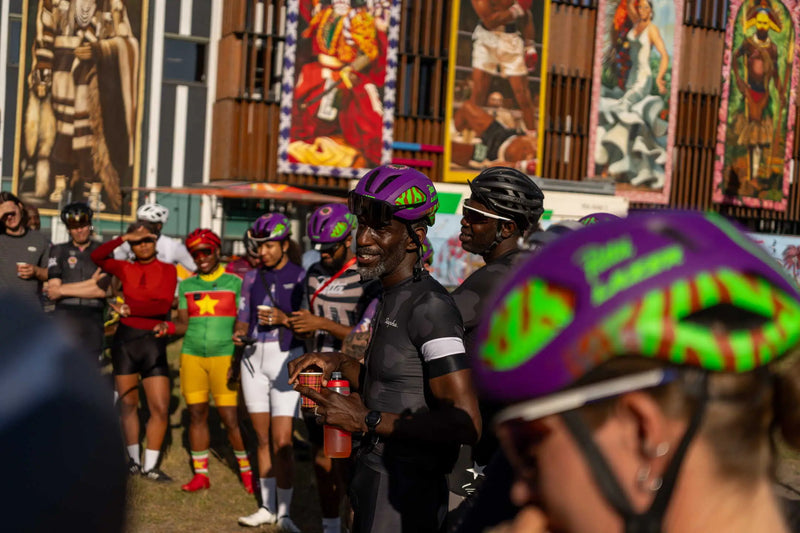
    Thank you for taking on the #Patta153 with us. 153 km of cycling to commemorate and honour the abolition of slavery in Suriname and the Dutch Caribbean, while acknowledging the generations who endured its violence and the lasting impact it continues to have today. Whether you joined us physically or took on the distance on your own, wherever you are in the world, we see you.Some bagged the 51k, others the 102k, and many rode the full 153k. No matter the distance, we did it as a collective on an important day of remembrance.Big up Rapha Amsterdam for the much-needed support station and Lazer Sport for keeping our heads safe. Thanks to De Regenboog Groep, Streetwise Cycle Team and Chroma Cycling for showing up with your crews and bringing the best energy. Until next time.💚Who’s going to be there for the #Patta154 next year?
    • Patta Cycling

    • What Went Down

Error